July 16, 2008

Blueprint Special (CITY)

The burger at Prune is famous. When Gabrielle Hamilton announced that her downtown Manhattan restaurant, known for simple-done-perfect dishes like sardines on Triscuits and monkfish liver on toast, would serve lunch, the burger was the thing to have. 

There was just one problem when I went to try it. It comes on an English muffin. I don’t like English muffins. There’s something about the dryness of their texture, the almost-metallic dullness of their taste, and the particular way they both soak up and repel moisture that gets right to the heart of my morbid fear of wet bread. So I asked for it on a roll. “No substitutions.” I kicked myself for even asking. 

And then it arrived: a sphere of burger right in the middle of two almost completely flat discs (the photos here are more an artistic interpretation than the real thing, which is impossible to replicate). I didn’t know where to start. Press the ends of the discs together and take the first bite burgerless? Pull the sphere towards the end, which would mean the first bite was full of ground beef and lamb (the not-secret secret) and the last just, ew, soggy bread?

Somehow I got through it. Blissfully, in fact. The English muffin was wet already with butter so the terror of moisture was mitigated by my affection for fat, and the burger flattened out, and then the bacon grabbed onto those little English muffin pockets, and there was just enough room for it on its long wooden platter, and I realized that for all my skepticism, this was a perfectly designed dish. 

Continue reading "Blueprint Special (CITY)" »

June 14, 2008

Assurance Agent (CITY)

Column, Published April 2008

It starts with a misunderstanding and ends with butter. It starts when I meet John, my friend who is a boy, and we’re talking the usual getting-to-know-each-other talk, and I mention that I like cooking a bit, and he mentioned that he likes food, too, and once cooked dinner for 18 people. And so, from this I infer, given my state of absolute unabashed limerence that leads people in these situations down all kinds of inferring roads, that John is a brilliant chef. I do not pay attention to the fact that John doesn’t cook when we’re at his house. Ever. I only pay attention to what I hear, and what I hear is that he is a cook, and a good one at that.

So, for six months, we scramble for dinner. We order in. We go out. Somehow, int hat New York way, we never really focus on what we’re going to eat, or really ever have complete meals. But here and there, we cobble together our survival.

And then I realize that I miss messing around with bowls and spoons, so I start small, with a few things. I tell him I’d like to use his kitchen for some experiments, if he doesn’t mind, and so I start experimenting, but only with things I know how to make, like pancakes. And then, New Year’s Day, I look in his fridge and see that his butter expired. A long time ago. Like, in 2005.

Continue reading "Assurance Agent (CITY)" »

Flash in the Pan (CITY)

Column, Published March 2008

Three eggs. One cup milk. One cup flour. Two tablespoons sugar. One teaspoon baking powder (optional). That’s it. That – my family’s pancake recipe – has been a mantra since I was old enough to wake up early and get out a bowl, measuring cups, and a wooden spoon. Those five – sometimes four – ingredients were the ones that went together to make our Sunday-morning pancakes (a minor peacekeeping) when I was a (majorly cranky) teenager. Then, when I moved to New York, they were at the center of my friends’ Sunday-morning brunches, my way of plying attention from a six-year-old, my first step towards dinner parties. Those pancakes, the only recipe I cant remember ever not knowing, are the lens through which I can look at my entire biography.


Continue reading "Flash in the Pan (CITY)" »

June 03, 2008

Tigerman Sees Red (And Topaz) (Metropolismag.com)

Published May 16, 2008 (link)


At the very end of last year, the American Institute of Architects awarded Chicago-based architect Stanley Tigerman the Topaz Medallion, which “honors an individual who has made outstanding contributions to architecture education for at least 10 years.” Technically, Tigerman practices with his wife, Margaret McCurry, as Tigerman McCurry Architects , and directs, along with Eva Maddox, his hometown’s Archeworks school, which provides a one-year post-professional education grounded in social causes. Some of his well-known projects include a playfully wonky (some might dare call it postmodernist) Children’s Advocacy Center, and the Pacific Garden Mission, a center for Chicago’s homeless. Practically, Tigerman thinks, disregards, considers, blames, hopes, and criticizes. He is judgmental, thoughtful, optimistic, and politically incorrect. No one is immune: his peers, his friends, his professors, his interviewer. Eva Hagberg takes a walk on his educational wild side. 

Good morning Stanley.
You’re right on time. Actually you’re a little late. 

Continue reading "Tigerman Sees Red (And Topaz) (Metropolismag.com)" »

May 22, 2008

Mobile Home? (Metropolis)

In 1987 philanthropists Mike and Penny Winton decided that they needed a guesthouse to complement their Philip Johnson-designed home in Orono, Minnesota. In 2007 owner-developer Kirt Woodhouse decided that the University of St. Thomas needed that same guesthouse for its Daniel C. Gainey Conference Center campus in Owatonna, Minnesota. In the 20 years since the Wintons hired an up-and-coming Santa Monica-based architect sho seemed to be onto something with his use of vernacular materials and mishmash approach to buildings, the name Frank Gehry has gone beyond household, and the guesthouse has become more than just a place to sleep.

The Winton Guest House comprises a 2,300-square-foot collection of discrete shapes that form one building (one can see in its separate cohesion a precursor for Mississippi’s Ohr-O’Keefe Museum). It is clad in brick, plywood, and black and galvanized sheet metal—the same types of materials Gehry used on his own Santa Monica home, the design that launched the Frank O. Gehry Associates frenzy.

Continue reading "Mobile Home? (Metropolis)" »

May 05, 2008

The Storytellers (Architect's Newspaper)

Published April 16, 2008 (link)

“We like to think of ourselves as the most open-minded clients we’re going to have,” said Greg Bradshaw, principal of the downtown architecture/interiors/fashion/book/concept/ethos/lifestyle/design firm AvroKO, which he heads along with Kristina O’Neal, Adam Farmerie, and a very tired—that evening, at least—William Harris. The four of them were sitting at the end of the bar at PUBLIC, their first venture as their own clients, and were talking about everything from the just-completed transformation of the restaurant Park Avenue Winter into Park Avenue Spring (on which Harris has been working non-stop), to their plans for a new restaurant on the rapidly gentrifying Bowery, to joking about what exactly O’Neal’s SAT scores were, and what exactly they mean.

The four, who met when they were eighteen, each have different approaches, personalities, and skills, but together they make up a coherent and collaborative whole. Initially, however, they operated as two firms, Avro Design (Bradshaw and Farmerie) and KO Media Studios (O’Neal and Harris). After many years of collaborating, the two firms merged while working on PUBLIC. Their ethos is research-driven as much as it is fantastical, interpretive as much as creative, and conceptual as much as style-conscious. The firm has become known mostly for its historically referential restaurant design, clear in everything from the Lower East Side’s Stanton Social, which adopted the neighborhood’s long history of tailoring with a herringbone-riffing wine wall, to PUBLIC—the restaurant they own and above which they work—where they took the discarded fixtures of municipal buildings from the 1930s and recast them, so that an old library card catalog is used to store old menus.

Continue reading "The Storytellers (Architect's Newspaper)" »

April 17, 2008

Behind the Curtains (Metropolis)

Published April 15, 2008 (link)

David Rockwell is sitting in a rocking chair in the lobby of an Aloft hotel, looking at a pool table. It’s 10 o’clock on a Monday morning in January. More accurately, he’s rocking in the rocking chair, which is green and plastic, and he seems calm for someone who created this theatrical space, whose architecture and design tends toward the bright sweeping gesture, the triple-note move, the overt discussion of play and stage and movement. Every thing looks good: the pool table is in the right place; the LED lights on the bar glow steadily; the entrance’s two glass doors are perfectly spaced; and the hallway carpet (designed to withstand 75,000 double rubs) looks like it’s barely been touched, even though it has, so far, supported hundreds of meetings, visits, inspections, and cocktail parties.

Rockwell is calm because his design for a new hotel chain—with the first location opening this summer in either Beijing, China, or in Lexington, Massachusetts—is looking great. He is happy because he knows that when the first one is finally built, it’ll look pretty much the way it looked in his mind—no small feat for an architect. And he’s in a good mood because the interior is feeling as right as it did the last time he checked in. There’s just one snag.

Continue reading "Behind the Curtains (Metropolis)" »

March 31, 2008

Design and the Elastic Mind (Wallpaper.com)

Published March 4 (link)

'Revolutions,' Paola Antonelli writes in her introduction to 'Design and the Elastic Mind', her just-opened exhibition at New York's Museum of Modern Art, 'are not easy on us.' It's a hell of a way to start a design show. That might be because it's a hell of a show.

'Design and the Elastic Mind', on view through May 12 in the museum's sixth-floor galleries, takes on ideas of the future, and how design works - and will work - with it. The over 200 objects, drawings, ideas, speculations, nanotechnologies, photographs, concepts, possibilities, environments, arguments, polemics, drawings, renderings, models and more on view here, combine to create a vision of the future that isn't apocalyptic, or even post-apocalyptic, but instead that exemplifies the range we cross-disciplinarily express these days; the work is everything from quietly hopeful to overtly celebratory, from politically argumentative to aesthetically stunning.

Continue reading "Design and the Elastic Mind (Wallpaper.com)" »

February 23, 2008

John Powers at Virgil de Voldere

EXTENDED: John Powers: Empire, Virgil de Voldere, 526 West 26th St, Rm 416, New York, February 21-April 25

February 01, 2008

The Worst Building In The History of Mankind (Esquire)


Published February 1, 2008 (link)

It's the Ryugyong Hotel in North Korea, where the world's 22nd largest skyscraper has been vacant for two decades and is likely to stay that way ... forever.

A picture doesn't lie -- the one-hundred-and-five-story Ryugyong Hotel is hideous, dominating the Pyongyang skyline like some twisted North Korean version of Cinderella's castle. Not that you would be able to tell from the official government photos of the North Korean capital -- the hotel is such an eyesore, the Communist regime routinely covers it up, airbrushing it to make it look like it's open -- or Photoshopping or cropping it out of pictures completely.

Even by Communist standards, the 3,000-room hotel is hideously ugly, a series of three gray 328-foot long concrete wings shaped into a steep pyramid. With 75 degree sides that rise to an apex of 1,083 feet, the Hotel of Doom (also known as the Phantom Hotel and the Phantom Pyramid) isn't the just the worst designed building in the world -- it's the worst-built building, too. In 1987, Baikdoosan Architects and Engineers put its first shovel into the ground and more than twenty years later, after North Korea poured more than two percent of its gross domestic product to building this monster, the hotel remains unoccupied, unopened, and unfinished.


Continue reading "The Worst Building In The History of Mankind (Esquire)" »

Hello.


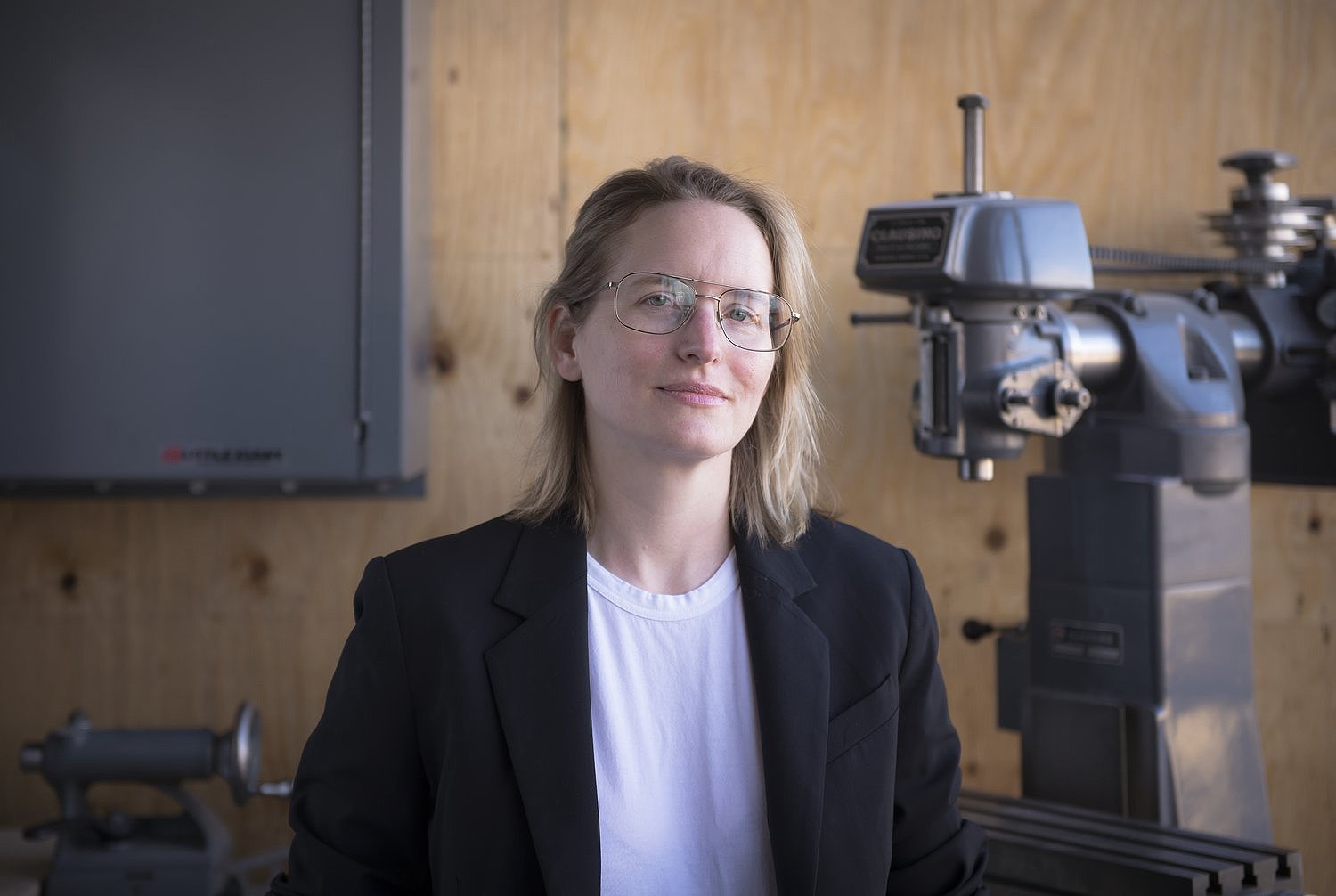
  • I'm a writer based in New York, and this is a collection of pieces. Sometimes I write about architecture for magazines like Wallpaper* and Metropolis and sometimes I write about food for magazines like CITY, where I'm a columnist. Words I have put in a row have also appeared in Interior Design, the Architect's Newspaper, the Huffington Post, Black Ink, domino, esquire.com, and the New York Times. I used to edit the design blog UnBeige and and now I blog about the Architectural League's Reimagining Risk series. One day I would like to write something long. Maybe that day is today.

Email me

Home

Blog powered by TypePad

Artists

Musicians